
Auburn Station: A True Allentown Story
As autumn draws near and thoughts turn to ghost stories and forgotten places, I'd like to share a tale that is, remarkably, true. It's a story that unfolded before my own eyes.
It's difficult to explain what compelled me to uncover the history of this dark and mysterious place. The pull was impossible to ignore, as though the story itself had chosen me long before I understood why.
Having been a resident of the Lehigh Valley area for many years, I was surprised to have located a relatively unknown newly renovated former silk mill to move into during a transitory period of my life. This now elegant award-winning building is located behind secured gates in a pocket of a wooded Southeast Allentown, PA. The present day units are beautifully designed lofts with high ceilings and rich wood floors and original brick walls.
My son and I rented the first unit on the first floor of Auburn Station. The door of this unit sits steps from the main entrance, protected by a lobby security camera.
It all began with a very loud knock on my door in the dead of night.
I was jolted awake from a deep sleep, overcome with an immediate sense of fear I couldn’t explain. I waited several minutes before going downstairs to look through the peephole. The building was secured, so I assumed it had to be a neighbor. But why would a neighbor be knocking on my door at that hour? I had only just moved in and didn’t know a single person there.
When I finally reached the door, no one was there.
The next day, I emailed the landlord and asked if she could review the security camera footage. Hours later, she responded with something that unsettled me even more: no one had appeared on the cameras at all.
I couldn’t shake the feeling that I was meant to notice something. The building itself already carried a dark, looming presence, as though it had been quietly watching long before I arrived. I found myself wondering what it once was, who had lived there before me, and what may have happened within its walls.
That was the beginning of my search.
Arduous internet searches turned up nothing. Allentown has a rich (domestic and globally dominant) silk, textile, iron, mining, and railroad history, so these buildings surely had a role. In the age of the internet, we tend to assume searches will uncover everything. But since history was told and recorded by people, we don’t always get the full story. And between the 1800s-1900s, it wasn’t easy to be alive, much less record our stories. But, eventually, pieces of the puzzle began to emerge. The story and names started to take shape, then critical pieces came in the form of help from Angie at Allentown’s Preservation Association who directed me to David at the City of Allentown, who enabled me to find the fire insurance maps.
And so the story begins.
Sometime after the decline of the railroads and before the Great Depression lies the history of this property now called Auburn Station. With Trout Creek at its base it sits quietly in the very Southeast corner of Allentown. Due to its location and surrounding trees, many don’t even know it’s there. The railroad next to it, hugging Trout Creek, is still very active. You can find retired engineers and train buffs, daily, sitting quietly in their cars with coffee, or out near the tracks in lawn chairs, waiting for the trains.
Evening walks around this property are magical. When you are at the very top back of the property, there is the most breathtaking view of the ridges of South Mountain.
A map from 1876 shows Thos. (Thomas) Barber aka “Ironman” listed as the property owner of the land Auburn Station sits on, as well as surrounding land framed inside the borders of the waterways. The word “quarry'' is also on this map which coincides with the previous map’s quarry markings. Thomas, his father William Harrison and his son Joseph were millwrights, iron makers, manufacturers of blast furnaces, mill machinery, gears, boilers, and more. The streets around the Auburn Station have names such as “Barber” and “Harrison”. It appears the Barbers used it only as a quarry for their thriving business and building located a few miles away in thriving Allentown.
Somewhere between 1876-1895 the Barbers sold the land to Maurice “Morris” Zinderstein. Maurice, his wife Anna, and their two sons, Charles and Emil came to Allentown, PA in 1895 from New York City. They were German Immigrants who built The Palace Mill on these beautiful grounds next to the quarry that same year.
In 1898, records reveal Maurice’s son Emil dies of Typhoid Fever (salmonella aka food poisoning). Research revealed that Maurice took it very hard and became “unbalanced”. Allegedly, Maurice blamed Emil’s death on son Charles and additionally accused their doctor of starving him. Later records tell a different story stating that his anger and unbalanced nature came from grieving that death of son Emil and a man named Max Wolff, the new mill owner.
Enter Max Wolff.
Records in 1899 state New York City resident Max Wolff “secured” a financial interest in Palace, and then later retained full possession of the mill. Wolff was then listed as Owner of The Palace Ribbon Mill in January of 1899.
Records then show Maurice was listed as “silk worker employed as a foreman”. (Take over, merge, or sale?) Max Wolff was now principal owner of the mill and came frequently from NYC by cab. Maurice’s son Charles was listed as the Superintendent. It was said Charles had some financial interest in Palace, but it was noted that there was a “severed connection before 1899”. It looks as though there was bad blood after the merge or sale between the Zindersteins and Wolff.
That same year – “sensational news!” was in the newspapers. On one of Max Wolff’s routine visits from NYC to the mill, he arrived in his cab and was greeted by Maurice, who confronted him at the office steps of the mill. (Note: These very office steps are the very same steps to the present day entrance which was a mere 15 feet from the door of my unit.) According to the cab driver that witnessed the whole thing, there was an animated argument with arms flying. Apparently Maurice said Wolff owed his son Charlie money for the acquiring of the mills. Maurice then fired 3 shots at Max with a revolver and was arrested the same day. It was big news and newspapers widely reported Maurice felt Wolff “froze them out” and thought Max “owed Charlie money”. Also reported, Maurice lived in a house owned by Wolff, and apparently Wolff asked him to make improvements and he allegedly never reimbursed him for that work.
Maurice was then indicted for aggravated assault and battery with intent to commit murder. He plead guilty, was fined $200.00 and sentenced to imprisonment in Lehigh County Prison for 3 years. Then he was sent to a state hospital for the insane at Norristown, PA. Prosecution stated he was “insane” and a “danger to himself and others” and “requires restraint”. Additional records reveal that Maurice served in the German War, raising an important question: Did the psychological scars of combat, the lingering trauma of war, and what we now recognize as post-traumatic stress contribute to the mental breakdown that followed?
Subsequent articles note that the employees of Maurice’s son Charlie had “great affection” for him and he was highly regarded by all in the mills, which were primarily very young women and men. Sadly, child labor was rampant in all the mills in the area at this time. The children were mostly sent to work by their poor parents. Thankfully, more and more protests finally ended this, but only after many years of these children being robbed of their lives. Nevertheless, it was said Charlie was well-loved and they gave them cigars and candy when he retired suddenly. I believe this explains the very sad, quiet, and somber energy of this place.
In 1902, Charles died of Typhoid Fever at the age of 36 (refrigeration of food was still limited and dependent on wealth and technology at the time making food poisoning common). Surviving the bullets at the age of 50, Max Wolff continued to operate as owner with the Palace name. Despite his military background, Maurice was a terrible shot. In 1907, Maurice and wife Anna Marie both died within months of each other, although sadly not connected with the mill at this time, because surely you can’t keep your job after you shoot the owner!
The silk industry in Allentown and surrounding Pennsylvania thrived through the 1940s and dropped off at some point. Interviews with longtime residents of the surrounding area say the property was vacant for a while, then used as an “antique market” and suffered trouble related to squatters and drug use in the 1980s.
In the end, I began to wonder who wanted me to tell their story?
Maurice came to Allentown chasing the American Dream, only to be haunted by the psychological wounds of war, devastated by sickness and loss, and ultimately felt betrayed by greed and power. His sorrow seems to linger over Auburn Station even now: not as something violent or cruel, but as a quiet hopelessness that drifts through the halls and echoes in the knocks that come in the dead of night.
Or perhaps it was Max’s story. An honest businessman who believed he was investing in opportunity, only to find himself woven into a family marked by misfortune, sorrow, and quiet tragedy.
Or maybe the building belongs not to either man, but to the many children who labored within its walls, children whose innocence was exchanged for survival, whose childhoods disappeared beneath factory smoke, exhaustion, and obligation.
Perhaps Auburn Station does not belong to one ghost at all, but to the weight of every life that passed through it.
Perhaps those stories will emerge with more knocks in the night…
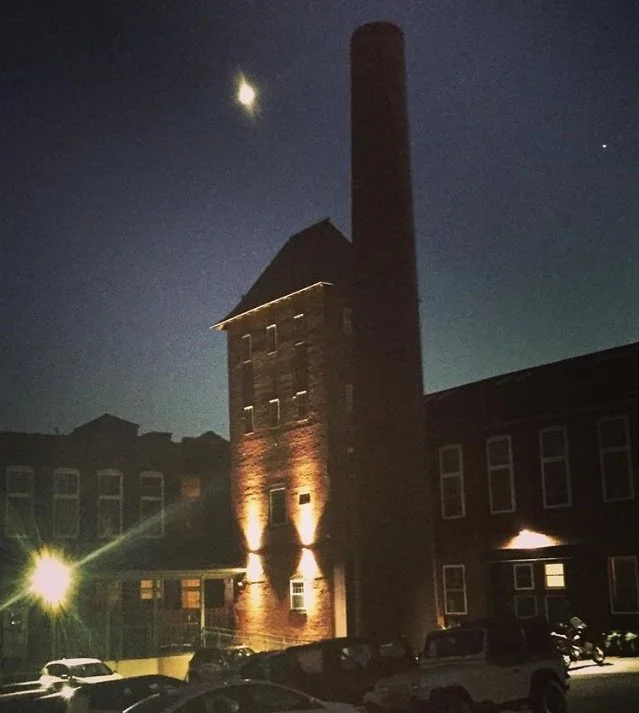
Present day photo of the award-winning restored property (this is 391). Evening walks around this property are magical. When you are at the very top back of the property, there is the most breathtaking view of the ridges of South Mountain.
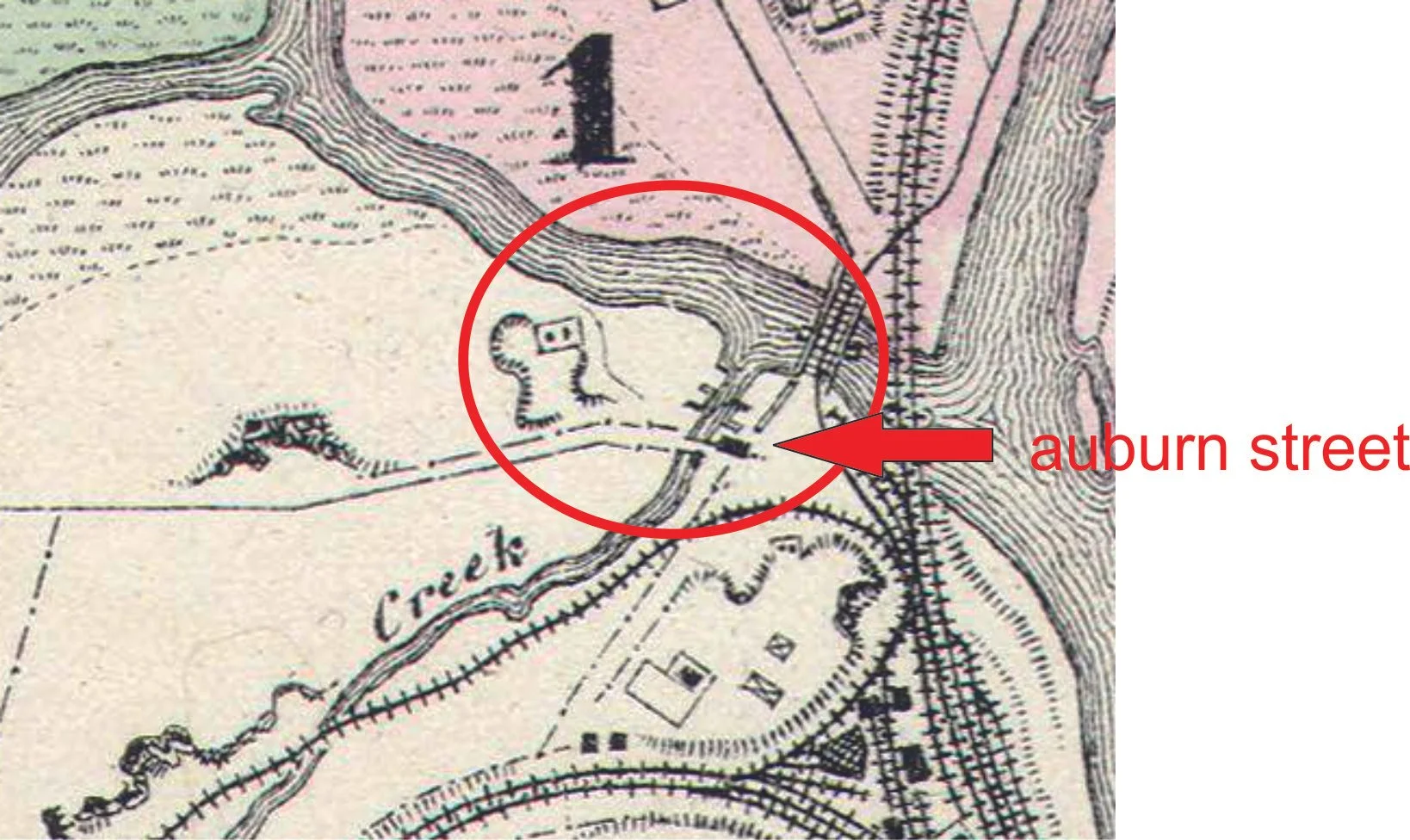
1876 – Auburn Street is shown unmarked and with quarry symbols on the property.
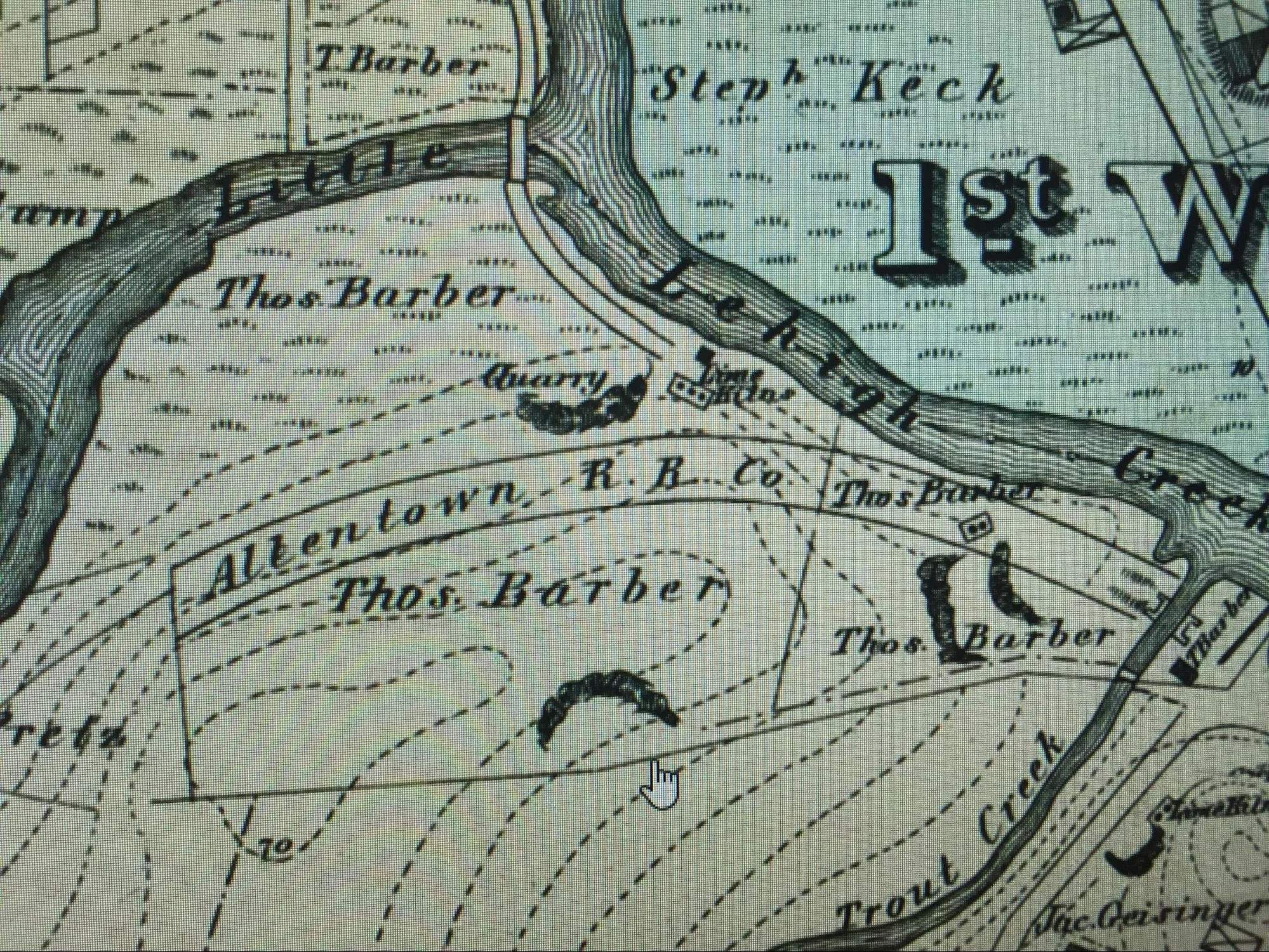
1876 – This 2nd Lehigh County Map from 1876 shows Thos. (Thomas) Barber aka “Ironman” listed as the property owner of the land Auburn Station sits on, as well as surrounding land framed inside the borders of the waterways. The word “quarry” also on this map which coincide with the previous maps quarry markings.
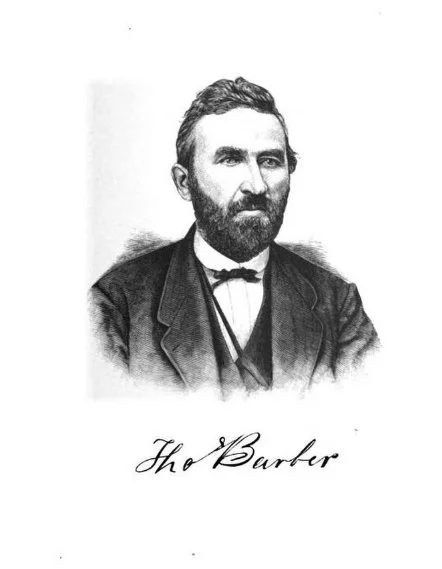
1876 (estimate) Photo of Thomas Barber
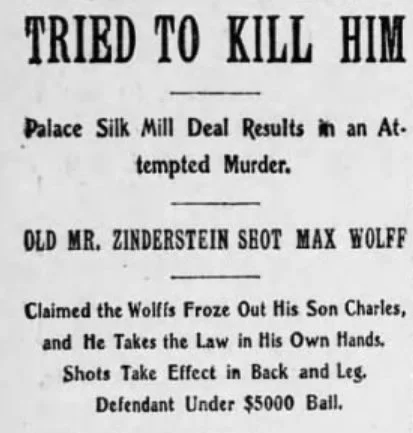
1899 - Sensational news!
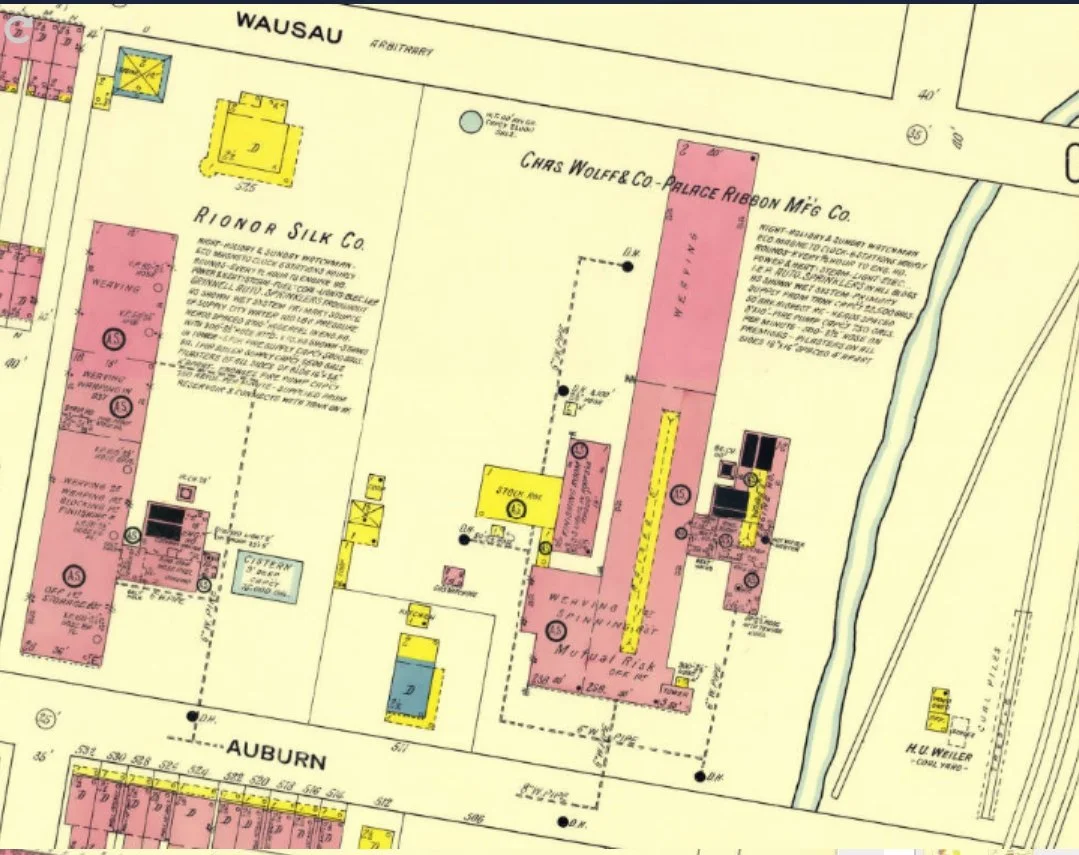
1911 – Fire Insurance Allentown map shows the property was divided at this point.
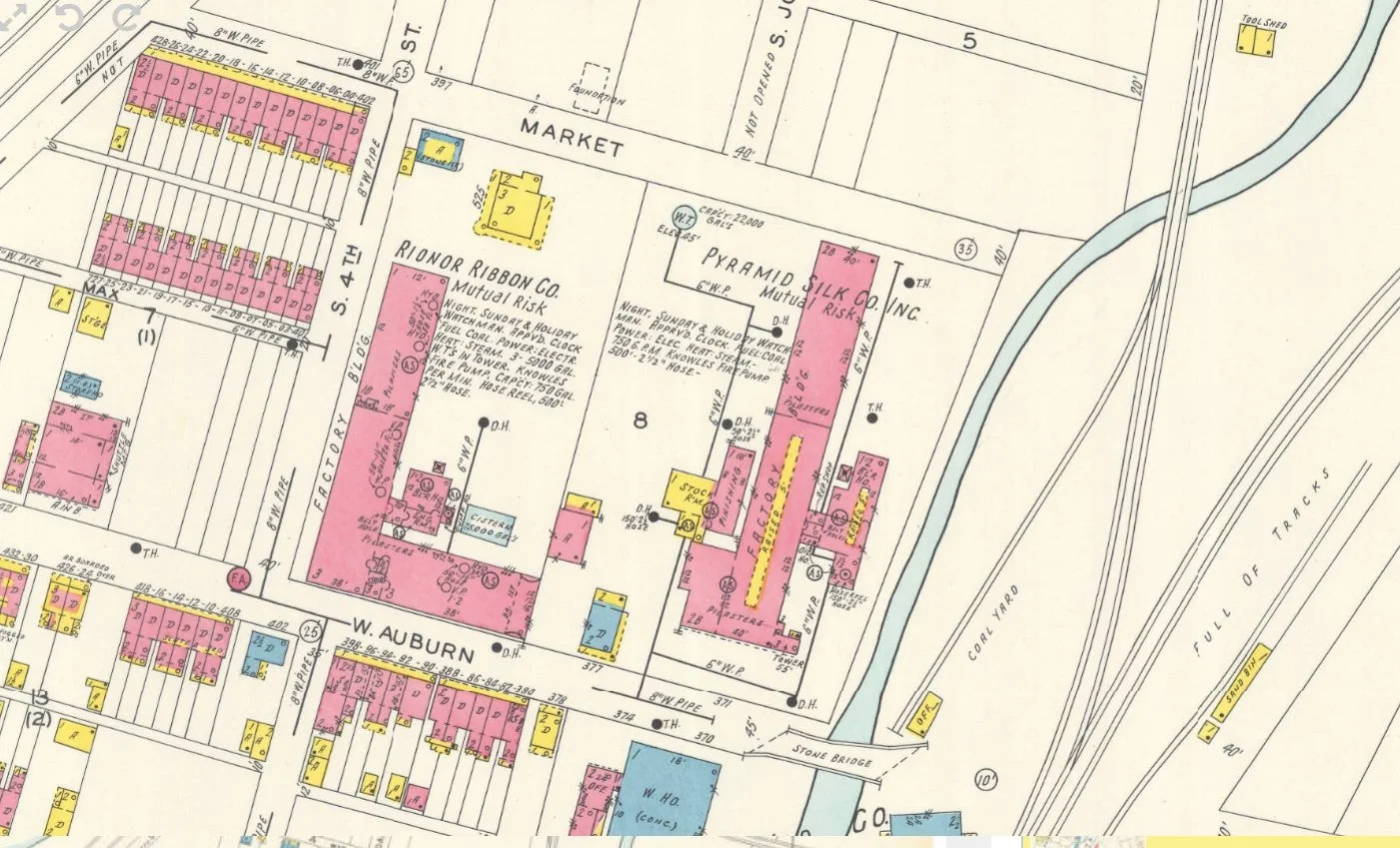
1932 - Fire map shows properties continue to operate separately and the 375 building is renamed "Pyramid Silk Co. Inc." (This could mean a new owner)
If you have any comments or additions, please feel free to email me!
Note: after I published these findings, I was contacted by Max's brother's great grandson, and Maurice's great granddaughter.
Links provided below:
Textile World Record - Volume 30 - Page 966 - Google Books Result https://books.google.com/books?id=YHwhAQAAMAAJ 1906 - Textile industry Reference to the 2nd building which would fall in line with the date of 1907 of tax records of Auburn Stations 2nd
building.https://www.lehighcounty.org/Departments/Assessment-Home/Search-Records
https://books.google.com/books?id=R-EBfPEK7fIC&lpg=PA361&dq=edgar%20j.%20lumley%20ribbon%20silk%20mill%20allentown%20pa&pg=PA361#v=onepage&q=edgar%20j.%20lumley%20ribbon%20silk%20mill%20allentown%20pa&f=false "The Blue Book" Textile Directory of the United States and Canada 1910-1911
Textile World - Volume 22 - Page 1158 https://books.google.com/books?id=249AAQAAMAAJ
https://en.wikipedia.org/wiki/Marion_Zinderstein
People, Poverty, and Politics: Pennsylvanians During the Great ... https://books.google.com/books?isbn=0838723209
List of Charters of Corporations Enrolled in the Office of the ... - Page 172 https://books.google.com/books?id=aUMoAAAAYAAJ
History of Lehigh County, Pennsylvania, and a Genealogical and ... https://books.google.com/books?id=mzQPAQAAMAAJ
Textile World's Directory of the Mill Trade in the United States, ... https://books.google.com/books?id=Xi0-AQAAMAAJ 1897 - Textile industry
Fibre & Fabric: A Record of American Textile Industries in the ... https://books.google.com/books?id=-hYAAAAAMAAJ 1907 - Textile fabrics
Emil's death Textile World - Volume 15 - Page 112 - Google Books Result https://books.google.com/books?id=_ZpAAQAAMAAJ 1898 - Textile fabrics, Clarence T. Davis becoming secretary and treasurer.
Journal - Part 1 - Page 138 (1901) https://books.google.com/books?id=vntMAAAAMAAJ
America's Textile Reporter: For the Combined Textile Industries https://books.google.com/books?id=GPtYAAAAYAAJ
Charles (1866-1902 death: (listed him as the owner at his death) https://www.findagrave.com/memorial/146174155/charles-a.-zinderstein
Newspaper clipping "Zinderstein shot Max Wolff" https://www.newspapers.com/clip/20502446/the_allentown_leader/ Palace Ribbon Mill
Textile World Record - Volume 30 - Page 966 - Google Books Result https://books.google.com/books?id=YHwhAQAAMAAJ 1906 - Textile industry
http://himedo.net/TheHopkinThomasProject/FamilyTies/BiographicalData/ps74/ps74_139.htm
© 2026 Lemon Penny. All rights reserved.
